


Trees have a quiet way of becoming favorites, not just because of how they look, but because of how they make us feel. Some people love towering oaks for their strength and sense of history, while others are drawn to cherry trees that turn spring into a celebration of soft pink blooms. Maples earn admiration for their fiery autumn colors, and willows are cherished for their calm, flowing branches that invite reflection. Favorite trees often hold memories—shade on a hot day, a place to climb, or a view from a favorite walk. In their own ways, these trees connect us to nature and remind us to slow down and appreciate the world around us. It is very easy to pick out a tree and plant it, but for your tree to be successful it is best to know all the basic facts about your desired tree. In this blog, we will go over our favorite two trees that thrive in this area.
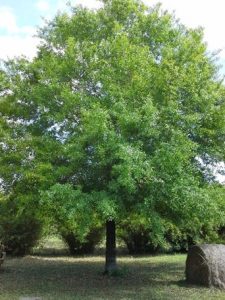
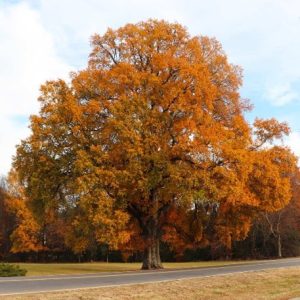
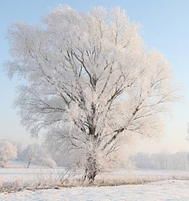
The willow oak, also known as the Quercus phellos, is a fan favorite of Marshall’s Tree Service. This fast-growing tree can grow up to 2 feet per year. The largest willow oak was documented in Northhampton, Virginia and was 106 feet tall. However, they are most commonly found to be a medium sized tree of about 60 feet in height with a canopy between 40 to 60 feet wide, with a lifespan of up to 200 years. Of course, under perfect conditions, the trees can grow taller and live longer than normal averages. These trees have long and skinny leaves which turn into beautiful colors of yellow, brown and orange during the fall. Unfortunately, these trees are deciduous which means they lose their leaves during the winter months to conserve energy during the shorter winter days. These trees thrive in full sun, well-drained soil, but are not particular about the types of soil they are in, if they are consistently watered during the first years of growing. The Willow Oak tree would be a great addition to your landscape to attract butterflies, help pollinators, and provide shade. These trees provide a food source from their acorns for waterfowl birds, turkey, fox, deer, bear, and squirrels. They also provide habitats for many squirrels, birds, owls, insects, and rodents.
Below you will see photos of the Willow Oak tree in the spring/summer, fall, and winter months.
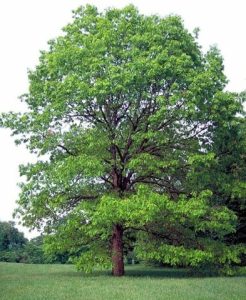
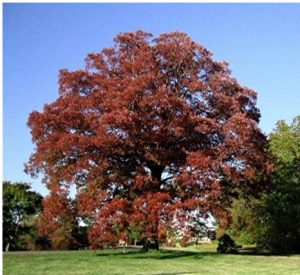
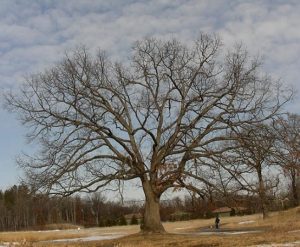
The white oak, also known as the Quercus alba, another fan-favorite of Marshall’s Tree Service. This tree grows between 1-2 feet at most, every year and is considered to be an ornamental tree because of its huge size and slower growth. The white oak reaches 80-100 feet in height, but it is not unheard of for the tree to grow larger. The tallest recorded was over 200 feet tall in West Virginia, until it fell in 1938, and it was named the Mingo Oak because it was in Mingo County. The canopies of these trees can grow to be as wide as the tree is tall. These trees have a lifespan of about 400 years but can live much, much longer. One of the oldest recorded was the Basking Ridge White Oak in New Jersey that was 75 foot tall and 125-foot-wide tip to tip that died in 2016. Another was the Wye Oak in Wye Mills, Maryland that was estimated to be 450 years old which fell in a thunderstorm in 2002. These trees thrive in full sun with adequate water. It is important that these trees are not over-fertilized, but they do like nutrient rich soil. The leaves of these trees are long with multiple lobes with rounded edges. In the fall, these trees turn into beautiful fall colors of red and brown. These trees provide excellent pollinator support and attract butterflies. The droppings from acorns provide food for turkey, wood ducks, pheasants, birds, rabbits, squirrels, deer, and black bear. It is also the only known food source for two caterpillars- both the Bucculatrix luteella and the Bucculatrix ochrisuffusa which are both moths. It is influential in providing a habitat for over 200 insect species which provide food for birds and other animals. The wood of the white oak is often used for furniture because it is rot and water resistant.
Below you will see photos of the White Oak tree in the spring/summer, fall, and winter months.
When choosing a tree to plant, it is always a good idea to check to make sure how large your tree will get to not disturb any structures. If you do not want to do any maintenance on your tree, make sure the tree does not require yearly trimming. To get the desired look for your landscape, I like to look at what the plant will look like during all the seasons of the year. Trees thrive in different soils based on locations. Before planting, you always want to make sure the tree you want prefers the type of soil you are planting it in.