


Most people do not realize that their trees are unhealthy until it is too late. An obvious sign a tree is dying is dead limbs or the lack of leaves, but what about the not-so-obvious signs? What about the root damage that leads to your tree falling because of lack of stability? What if your tree is rotting from the inside out due to weather damage or termites? What if your tree is causing harmful growth of its own? We will go over the most common types of unhealthy trees.
Root Damage
Statistically, humans cause the most root damage to trees without even knowing what they are doing wrong. Believe it or not, trees have a hard time surviving if damage is done to the roots of the tree- no matter how big or small. Signs of root damage include your tree dropping its leaves, a decrease in growth, and twig dieback of new growth. Chemicals and salts from roadways cause root damage and will decrease the roots’ ability to absorb water. One of the common causes of root damage is when humans have the tops of the roots grinded in their yards. However, this small act can kill your tree and let pests in. Planting trees too closely together will cause weakness in the roots of the tree, and both trees will be competing for their place there and often end up intertwined and do not live long because they do not have enough adequate nutrients.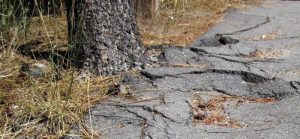
Tree Fungus
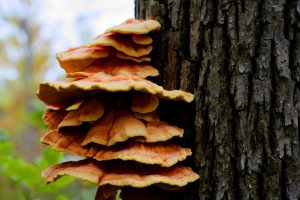
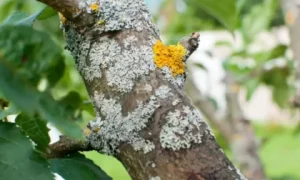
Most people also do not know that when mushrooms or fungus are growing around or on a tree, it is also an indicator of decay. Localized areas of fungus on the outside of the trees can cause weakened areas of the tree due to rot which can cause the tree to break off in certain areas and let in other diseases that will kill your tree. A common fungus is the yellow tree fungus, also called the chicken of the woods. This fungus appears yellow or orange on your tree, and it often causes the tree to rot from the inside out which will eventually lead to your tree falling. Fungi also affect other areas of your trees, like the leaves. It is best to keep a close eye on the leaves of your tree and to also use fungicides to prevent the fungus from attacking the leaves. If your leaves start developing yellow or dark spots, it is best to have them inspected by a tree expert to determine if they have been infected and what to do next. Vines play a key part in a tree’s health. If your tree is wrapped in vines, they will trap in moisture which provides a great habitat for fungus and bacteria growth. The vines can also suffocate your tree and take away vital nutrients for the tree to survive, making your tree significantly weaker.
Unhealthy Bark
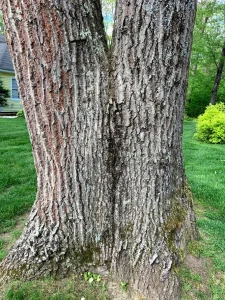
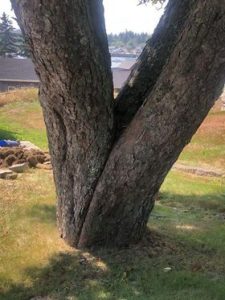
Another unhealthy occurrence is peeling bark. There is a large difference between bark that is normal shedding and bark that is peeling because of disease. While some trees do have peeling bark and are healthy, others could mean a serious problem for your tree and exposure to unwanted water damage that leads to rot. You do not want your tree to have bark that is peeling off in large areas, this could be a sign your tree is getting improper nutrition or that pests are infecting your tree. Cracks or hollow areas of your tree trunk could lead to excessive water and rot damage and should be addressed immediately. Another phenomenon that happens is included bark, which is overlapping of bark on trees. This happens due to two limbs or leads growing together creating no clear leader of the tree. This causes one to be weaker than another, and eventually one will fall or break off.
Conclusion
Most home developers plant trees that are not good for the area in which they are planting. Most developers use fast-growing trees. To know the best tree to plant, you should know how large the tree can get and if the roots are going to impact any sidewalks or buildings. The roots of trees will continue to grow through concrete and often damage the concrete which leads to human interaction and cutting or trimming roots. This will seriously damage your tree and often times, kill it. It is always best to consult with a professional arborist about the health of your tree.